Description
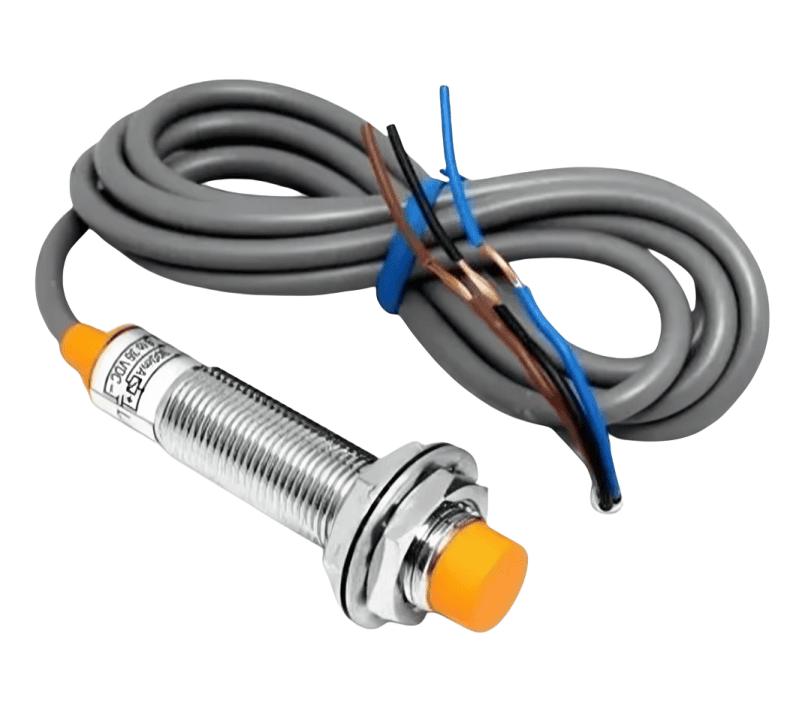
Inductive Proximity Sensor (PNP + NO) is a robust, non-contact sensor designed to detect metallic objects with high precision. It operates on the inductive sensing principle, generating an electromagnetic field that detects the presence of metal objects (such as iron, steel, or aluminum) within its range.
With its 12mm cylindrical body, this sensor is compact and easy to mount on industrial machines, robotic systems, or automation setups. It provides a PNP normally open (NO) output, making it simple to interface with Arduino, PLCs, CNC controllers, and industrial automation boards.
The KOSMOS sensor ensures excellent repeatability, high switching frequency, and long service life, making it ideal for proximity detection, object counting, and position sensing in both educational and industrial environments.
⚙️ Features:
-
Type: Inductive Proximity Sensor – PNP NO
-
Sensing Distance: 4mm–8mm (depending on metal type)
-
Diameter: 12mm
-
Output Type: PNP, Normally Open (NO)
-
Supply Voltage: 6V–36V DC
-
Output Current: ≤ 300mA
-
Detection Object: Metals (iron, steel, aluminum, etc.)
-
Response Frequency: ≤ 500Hz
-
Indicator: Built-in LED (detection status)
-
Material: Nickel-plated brass body
-
Cable Length: ~1 meter
-
Mounting Type: Threaded barrel with nuts for easy installation
📦 Applications:
-
Industrial automation and control systems
-
Robotic arms and position detection
-
Metal object counting systems
-
Conveyor automation and limit sensing
-
Arduino and PLC-based sensor experiments
-
Proximity sensing in smart machinery