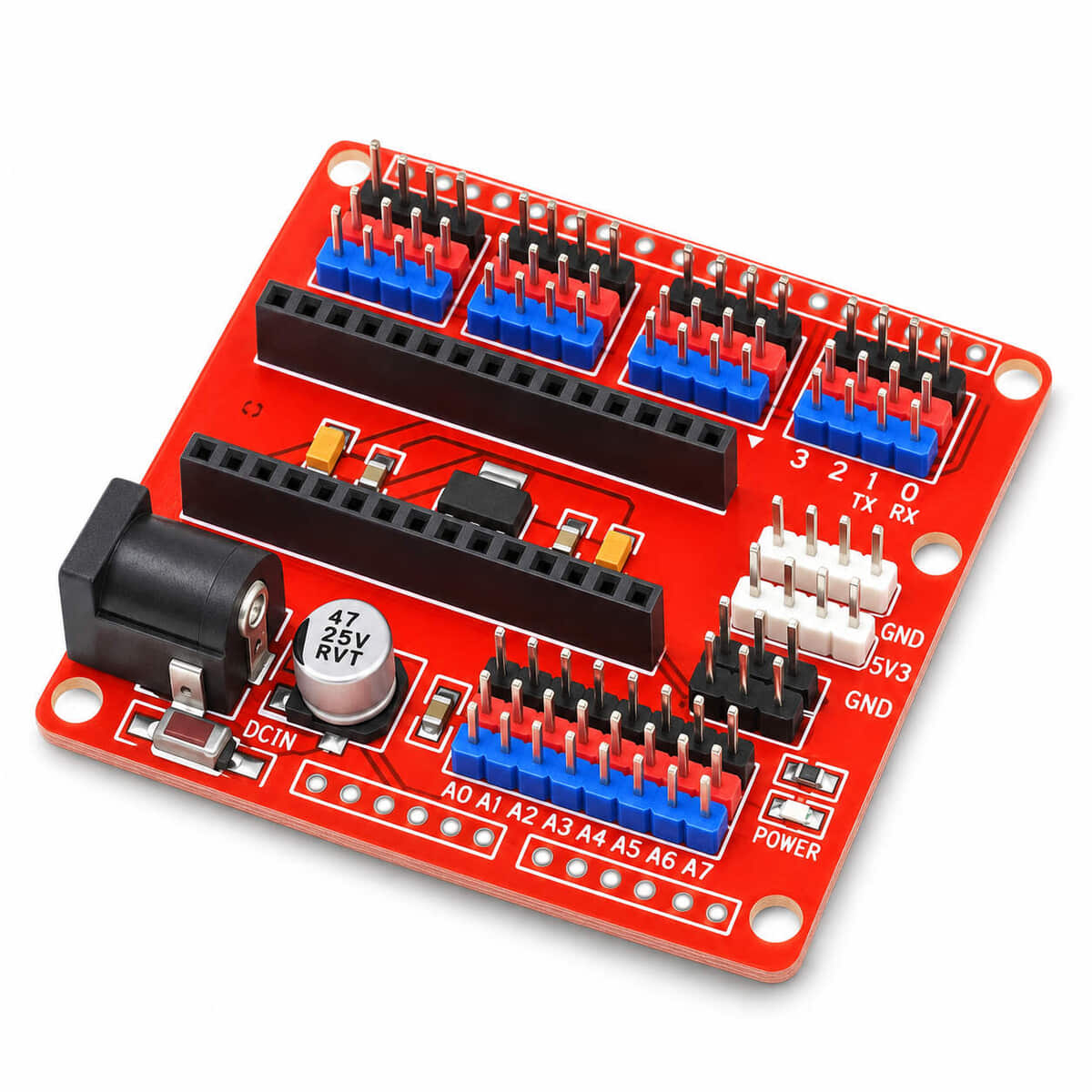
Description
-
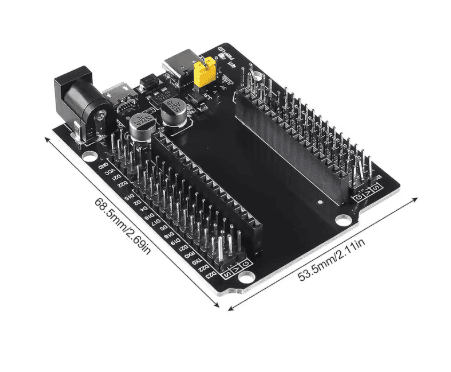
Compatibility: This shield is specifically designed to be compatible with the Arduino Nano, a compact and popular microcontroller board based on the Atmega328 or Atmega168 microcontroller.
-
Prototyping Area: One of the primary features of this shield is a large prototyping area with holes and pads for soldering or connecting electronic components. It allows you to create custom circuits and connections for your projects without the need for a separate breadboard.
-
Peripherals and Components: The shield often includes various components and peripherals such as LEDs, push buttons, resistors, capacitors, and headers. These components can be used for experimenting and prototyping different electronics projects.
-
Access to Arduino Pins: The shield provides easy access to all the pins of the Arduino Nano, allowing you to connect your custom circuits and components directly to the microcontroller.
-
Voltage Regulation: Some shields come with voltage regulation circuitry, which can provide stable voltage levels for your projects. It’s particularly useful when you need to power external components.
-
Library Support: Libraries and code examples are often available for popular microcontroller platforms like Arduino, making it easier to interface with the components and features of the shield.
-
Applications: Arduino Nano Expansion Prototype Shields are used in a wide range of applications, including robotics, IoT (Internet of Things) projects, data logging, sensor interfacing, and general-purpose prototyping.
-
Mounting: The shield typically includes mounting holes for secure attachment to a project or enclosure.